Gijs Witdouck
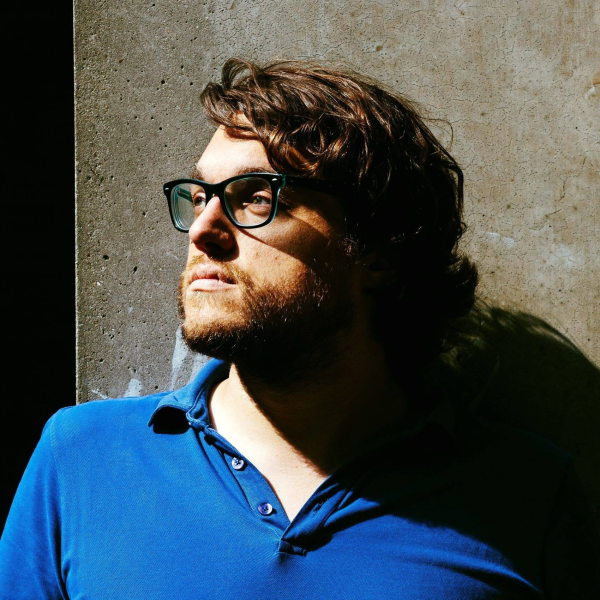
Systems. Sound. Story.
My ambition is to design interactive systems with intention. I believe games can foster empathy and understanding in ways no other medium can — not through exposition, but through the constraints players navigate and the choices they make.
Across my work in linguistics, teaching, web development, and music, the constant has been communication: how to articulate ideas clearly, bridge disciplines, translate vision into implementation, and tell stories through sound design.
I’m most at home where creativity meets technology, because that’s where the most interesting questions live. Through curiosity and collaboration, I look for unexpected connections between arts and politics, science and culture, daily life and philosophy.
If this sounds like someone you'd want on your team — or if you just want to grab a beer and talk game design — reach out. I’m always interested in good conversations.
Beyond Game Design
If one word could describe my entire life so far, it would be curiosity. When I was nine, I started assembling my own "encyclopedia", documenting whatever fascinated me with copies from library books and drawings I made. That attitude never stopped - I still feed that curiosity through voracious reading across history, psychology, linguistics, music, culture, politics, and many more topics.
My interest in technology started with me repeatedly crashing and having to fix our family's first Windows 95 PC. It taught me quite a few things about what files you probably shouldn't delete to make space for your games, but also about the different parts of a computer, about the BIOS, etc. At school, I was fascinated by the classes about logic gates and circuits, and by the age of 14, I took my first steps into programming. Today, I still tinker with electronic circuits, write scripts to automate boring tasks and yes, still crash my PC from time to time.
At university, I studied linguistics and literature. I loved learning about child language acquisition, translation studies, linguistic pragmatism, and how playwrights like Pinter subverted assumptions about communication. But most of all, I was fascinated by how language doesn't just describe but also influences the world - how it shapes our thoughts and how it can make people understand the world and each other, feel all kinds of emotions, or burst out in laughter.
With languages come cultures. Curious as always, I spent most of my twenties traveling, visiting over 25 countries, and living in three. I gravitated towards places where recent history is still tangible in present-day culture: the area around Chernobyl, the Palestinian West Bank, the frozen conflict in Nicosia, Ceaușescu's winter palace, they all taught me how history is a tapestry of causes and effects, not a random sequence of events.
I also try to understand aspects of different cultures through music. I have the ambition to own at least one good record from every country on earth, and to find something I like in every musical genre. It's not always easy - yodeling still isn't my cup of tea - but it's an interesting process. It also enriches my own musical style, playing Balkan rhythms on the drums and creating my own music from folk to techno. I've also developed a profound interest in sound itself: its physical properties, its constituent parts, and how to recreate them with samplers and synthesizers.
Even learning itself is a topic I love learning about. From my own frustrating experiences as a teenager and later my reading on the topic, I've become convinced that our education systems are still firmly rooted in 19th Century assumptions about children and learning - assumptions that don't leave much room for individual differences and talents. I worked at a Sudbury School, where I had the privilege to witness how children learn when we don't force them, driven by their own curiosity. To me, there are few greater pleasures in life than asking somebody the right questions to help them figure something out, and seeing the moment the lightbulb goes on.
Beneath these separate interests lies a common thread: I want to find the connections. How history influences culture, how technological advances enable creative expression, how language shapes thought, how schools limit or empower children. And most of all, how systems - in games, in organisations and in societies - influence behaviour.